Keep the Ball Rolling

Generational Gems for Future LeadersSo many wonderful stories and lessons are available to us today and yet we seldom hear or read them as our media chooses to focus on the more negative. Thus, we created this Generational Gems series. We all have the responsibility to see that these Gems are passed on to the coming generations. The following Gem is true, goes back a few decades, and is certainly pertinent today. Take a moment and share it in the hopes of keeping it alive.

Living in the Same Box

It is 1936. American Jesse Owens seems certain to win the long jump competition in the Olympic games. The previous year he had jumped 26 feet, 8 1/4 inches—a record that will stand for 25 years.

jesse-owensAs he walks to the long-jump pit, however, Owens sees a tall, blue-eyed, blond German taking practice jumps in the 26-foot range. Owens feels nervous. He is acutely aware of the Nazis’ desire to prove “Aryan superiority.” And as a black son of a share cropper, he knows what it is like to feel inferior.

On his first jump, Owens inadvertently leaps from several inches beyond the takeoff board. Rattled, he fouls on his second attempt too. One more foul and he will be eliminated.

At this point, the tall German introduces himself as Luz Long. “You should be able to qualify with your eyes closed!” he says to Owens, referring to his upcoming two jumps. For the next few moments, the African American and the white model of Nazi manhood chat together. Then Long makes a suggestion. Since the qualifying distance is only 23 feet, 5 1/2 inches, why not make a mark several inches before the takeoff board and jump from there, just to play it safe? Owens does and qualifies easily.

In the finals, Owens sets an Olympic record and earns the second of four gold medals. But who is the first person to congratulate him? Luz Long—in full view of Adolf Hitler! Owens never again sees Long, who is later killed in World War II. “You could melt down all the medals and cups I have,” Owens later writes, “and they wouldn’t serve as plating on the 24-carat friendship I felt for Luz Long.”

crayonboxPerhaps unknowingly, Luz Long taught the world a valuable lesson.

Someone else put it like this: “We can learn a lot from crayons. Some are sharp … some are pretty … some are dull … some have weird names … and all are different colors … but they all have to learn to live in the same box.”

The same holds true for today’s workplace, and we shouldn’t overlook the importance of this lesson.

motivational speaker Harry K. JonesHarry K. Jones is a motivational speaker and consultant for AchieveMax®, Inc., a company of motivational speakers who provide custom-designed seminars, keynote presentations, and consulting services.

Harry's top requested topics include change management, customer service, creativity, employee retention, goal setting, leadership, stress management, teamwork, and time management

For more information on Harry's presentations, please call 800-886-2MAX or fill out our contact form.

Follow Harry K. Jones on FacebookFollow Harry K. Jones on Linked InFollow Harry K. Jones on TwitterFollow Harry K. Jones on Google+

Employee Suggestion Programs Obsolete?

Suggestion BoxThere are many who would agree with the title of this article. There are as many, if not more, who would disagree. Let’s re-frame the question. Do employee suggestion programs work, or do they not work! The answer is YES.

Maybe we should re-frame the answer as well. It’s not the suggestion programs which work or don’t work. It’s the organization using such programs which fails or succeeds.

While many companies have discontinued formal suggestion programs for a variety of reasons, other organizations have reported extraordinary success by tapping the capabilities of their work force.

We’ve had the opportunity to witness first hand the true impact of an effective suggestion program working with various chapters of the Employee Involvement Association (EIA) across the country. As a result of what we’ve seen first hand, we’ve decided to add another feature to our growing blog. In this series, we’ll be sharing examples of employee contributions, the impact on organizations, and tips and tools to create, support and strengthen internal programs.

Let’s start by examining some history.

The idea of workplace suggestions began 288 years ago in Japan. You’d think we would have fine-tuned this powerful force by now, wouldn’t you? Well, some have and those particular groups have benefitted beyond all expectations. However, here we are almost 300 years later, and only 3% of U.S companies have effective suggestion programs. Everyone talks about them. Few produce results. Sounds like a classic example of “the knowing-doing gap.”

Sharing the results of a survey conducted by “Office Team,” USA Today says: “Only 38% of working men and women feel their managers are willing to listen to new ideas and suggestions for improvement.” True or not, that perception will hinder any efforts to create, support, and benefit from any suggestion program efforts.

However, the 3% that have established effective suggestion programs have certainly achieved a return on their investment far beyond the time and effort involved.

Let’s examine a few examples of those that swear by suggestions programs.

  • Harley-Davidson saved $3,000,000 in 30 days!
  • The U.S. Army got 530 ideas in three weeks!
  • Holly Farms identified $1,000,000 in savings!
  • Eaton Corp. gained 944 ideas from 113 people reaching 100% participation!
  • Parker Hannifin Corp. got 499 ideas from 103 employees!
  • National Semiconductor saved $3,600,000 using a suggestion campaign!
  • The U.S. Park Service made more than 12,000 suggestions with an approval rate of 75%!

Employees Buy an Airplane with Savings

747One of the biggest success stories relating to employee suggestions comes from American Airlines (AA) in Fort Worth, Texas. AA ran a year-long suggestion program called “IdeAAs in Flight.” At the end of the year, it purchased a $50.3 million Boeing 757 with the money it saved from the employee suggestion program. AA receives an estimated $55 million a year from its employee suggestion program and reinvests $15 million back into the employees suggestion program.

A Gamble Pays Off

Randy White, an employee of Oregon State Lottery, submitted a suggestion to his manager after finding a solution to upgrade video-lottery terminal equipment so the equipment would accept the new currency issued that year. Randy recommended replacing 2,500 components in terminals at $12.50 each, compared to the manufacturer’s proposal of $450 per terminal. Randy saved the State of Oregon $1,200,672 (one million, two hundred thousand, six hundred and seventy-two dollars) and was awarded $5,000.

Quick Turnaround

Heartland Foods, a Minnesota turkey processor, received 49 ideas from employees in the first four months of a suggestion program. After implementing just 20 of those ideas, the company saved $40,000 in the first year.

Overwhelming Response

W.R. Grace, a specialty chemical manufacturer in Atlanta, saw its suggestion program generate 1,800 ideas from just 55 employees. It implemented more than half of them for a total savings of $125,000.

Shocking ROI

When South Carolina Electric and Gas set up a suggestion program, employees submitted 130 ideas during the first nine months. One of those ideas paid for the program tenfold.

Your organization has a source of talent that’s waiting to be tapped for new ideas. Employees are that source. Get out there and get inside their heads. Set up a suggestion program and tackle it with the same planning and dedication you would expend on any other major project. If you offer enough recognition and set up the right environment, the results will amaze you.

motivational speaker Harry K. JonesHarry K. Jones is a motivational speaker and consultant for AchieveMax®, Inc., a company of motivational speakers who provide custom-designed seminars, keynote presentations, and consulting services.

Harry's top requested topics include change management, customer service, creativity, employee retention, goal setting, leadership, stress management, teamwork, and time management

For more information on Harry's presentations, please call 800-886-2MAX or fill out our contact form.

Follow Harry K. Jones on FacebookFollow Harry K. Jones on Linked InFollow Harry K. Jones on TwitterFollow Harry K. Jones on Google+

Fact-A-Day from Harry K. – July 28, 2009

Fact-A-Day from Harry K.In the spirit of C.A.N.I. (Continuous And Never-ending Improvement), here are this week’s new facts—one for each day of your coming week. Pass them on to others to keep the spirit alive or invite your friends and family to visit our blog where they can also view previous entries.

  • The U.S. has more airports than any other country—15,431.
  • Keeping moth balls in your tool chest will help prevent rust.
  • More steel is used in the U.S. to make bottle caps than to make cars.
  • Before 1859, baseball umpires had a comfier life. Instead of crouching behind the plate the whole game, they got to officiate from the best seat in the house: padded rocking chairs placed behind the catcher.
  • Over the course of a lifetime, the average American stands a one in 5,552 chance of dying in a plane crash (including small, private planes). The lifetime odds of dying in a car wreck are one in 247.
  • Portrait artist James Whistler (Whistler’s Mother) decided to paint his mother when the person who had scheduled an appointment with him failed to show.
  • Exactly 342 chests of tea were dumped at the Boston Tea Party. Some survive to this day.

motivational speaker Harry K. JonesHarry K. Jones is a motivational speaker and consultant for AchieveMax®, Inc., a company of motivational speakers who provide custom-designed seminars, keynote presentations, and consulting services.

Harry's top requested topics include change management, customer service, creativity, employee retention, goal setting, leadership, stress management, teamwork, and time management

For more information on Harry's presentations, please call 800-886-2MAX or fill out our contact form.

Follow Harry K. Jones on FacebookFollow Harry K. Jones on Linked InFollow Harry K. Jones on TwitterFollow Harry K. Jones on Google+

Is Your Calendar a Resource?

calendarI recently received an e-mail from a client who had just signed up for our blog delivery via e-mail. She was wondering why we begin each month with a calendar listing all daily, weekly and monthly celebration dates. She personally found it useful but wondered about its origin.

I sent a note back to her explaining that we actually started it at the request of another client. During a monthly leadership series session, we were discussing creative methods of monthly marketing and promoting for both internal and external customers. We shared examples of various ways of using unique and classic holiday dates to create employee promotions as well as generating customer involvement. This particular group was a bit surprised at the large number of celebrations taking place each and every month of the year and suggested that we post those creative events on our blog for their convenience in planning promotions. We’ve done it ever since for clients who obviously appreciate the assistance and support.

In a few days, on August 1, you’ll see our new calendar for the coming month. Share it with your staff as you devise promotions around the many opportunities coming up as summer winds down. You may want to plan events to involve or reward your employees or maybe create a promotion to attract the attention of your customers/clients/members … both existing and potential.

Brainstorm with your staff to create a unique promotion around upcoming celebratory August dates such as:

  • Back-to-School Month
  • Children’s Eye Health and Safety Month
  • Family Fun Month
  • Home Business Month
  • National Golf Month
  • National Immunization Awareness Month
  • National Clown Week
  • National Fraud Awareness Week
  • National Elvis Week
  • National Smile Week
  • Single Working Women’s Week
  • Be Kind to Humankind Week
  • Minority Enterprise Development Week
  • Respect for Parents Day
  • Sports Day
  • Sweet Corn Day
  • World Wide Web Day
  • American Family Day National Watermelon Day
  • National Chocolate Chip Day
  • National Lighthouse Day
  • Twins Day
  • National Garage Sale Day
  • National Book Lovers’ Day
  • S’mores Day
  • International Youth Day
  • Kool-Aid Day
  • International Homeless Animals Day
  • Cupcake Day
  • “Black Cow” Root Beer Float Day
  • National Senior Citizen’s Day
  • International Strange Music Day
  • National Banana Split Day
  • National Women’s Equality Day
  • National Dream Day
  • National Trail Mix Day

Consider creative contests, posters, competitions, give-aways, decorations, etc. The daily, weekly and monthly events listed above are just a few of those taking place in August. Be sure to check our complete blog list on August 1 to take full advantage of this terrific resource on the first of each and every month in the future.

motivational speaker Harry K. JonesHarry K. Jones is a motivational speaker and consultant for AchieveMax®, Inc., a company of motivational speakers who provide custom-designed seminars, keynote presentations, and consulting services.

Harry's top requested topics include change management, customer service, creativity, employee retention, goal setting, leadership, stress management, teamwork, and time management

For more information on Harry's presentations, please call 800-886-2MAX or fill out our contact form.

Follow Harry K. Jones on FacebookFollow Harry K. Jones on Linked InFollow Harry K. Jones on TwitterFollow Harry K. Jones on Google+

Learn From Anyone and Everyone

In our continuing effort to encourage the closing of the knowing-doing gap, we recommend that everyone maintains an open mind and willingness to learn life’s lessons whenever and wherever possible.

Wisdom from the past or present can be applied to everyday problems, challenges, speed bumps and even opportunities. We need only be open to the power of re-framing. Constant repetition permits us to become more proficient in applying the wisdom of others, past or present, to deal with our current day needs.

As an example, let’s travel back to the time of Noah and the great flood to see the many valuable lessons we can adapt to today’s challenging times.

Let’s count the lessons we should have learned from Noah:

  1. Noah's ArkDon’t miss the boat.
  2. Remember that we are all in the same boat.
  3. Plan ahead. It wasn’t raining when Noah built the Ark.
  4. Stay fit. When you’re 600 years old, someone may ask you to do something really big.
  5. Don’t listen to critics; just get on with the job that needs to be done.
  6. For safety’s sake, travel in pairs.
  7. Speed isn’t always an advantage. The snails were on board with the cheetahs.
  8. When you’re stressed, float a while.
  9. Remember, the Ark was built by amateurs; the Titanic by professionals.
  10. No matter the storm, there’s always a rainbow waiting.

motivational speaker Harry K. JonesHarry K. Jones is a motivational speaker and consultant for AchieveMax®, Inc., a company of motivational speakers who provide custom-designed seminars, keynote presentations, and consulting services.

Harry's top requested topics include change management, customer service, creativity, employee retention, goal setting, leadership, stress management, teamwork, and time management

For more information on Harry's presentations, please call 800-886-2MAX or fill out our contact form.

Follow Harry K. Jones on FacebookFollow Harry K. Jones on Linked InFollow Harry K. Jones on TwitterFollow Harry K. Jones on Google+

Lessons, Lessons, Everywhere

Generational Gems for Future LeadersIt’s amazing how many lessons we can find within our environment if we just pause, observe, and think about the many obvious things we usually take for granted.

The Wizard of Oz, based on the best-selling book by L. Frank Baum, was first released in 1939.

  • It is often ranked among the top ten best movies of all-time.
  • It is believed by many to be the most-watched film in history.
  • Hundreds of millions have seen this movie over the past 70 years.

Of those millions who saw this classic, many would say it was simply an entertaining family movie. Many others would share what they thought was a powerful moral embedded within the storyline. In fact, based on one’s personal philosophy, there were supposedly several morals identified in this time-honored plot.

  • Some agree with the folk rock band AMERICA who, in 1974, sang: “Oz never did give nothing to the Tin Man that he didn’t, didn’t already have!” They were, of course, referring to the potential within every individual whether we realize we have it or not.
  • Many related this fable to another classic, Acres of Diamonds, when they heard Dorothy say: “The next time I go looking for my heart’s desire, I won’t look any further than my own backyard. If it’s not there, then I never really lost it to begin with.”
  • Still others truly believed it to be a classic parable on the silver crusade.
  • Others felt it contained an obvious message of populism and national reform.

Although it’s quite obvious that people’s opinions were based much on their personal beliefs and values, one must admit that it’s to discover a “moral to the story” in most everything we see. As proven by The Wizard of Oz, the vehicle containing the moral can be quite simplistic.

For instance, think about the things we can learn from a simple jigsaw puzzle.

  1. jigsawThe creator of the puzzle gave you the picture as a guidebook.
  2. Be sure to look at the big picture. Getting hung up on the little pieces only leads to frustration.
  3. Establish the border first. Boundaries give a sense of security and order.
  4. Don’t force a fit. If something is meant to be, it will come together naturally.
  5. When one spot stops working, move to another. But be sure to come back later.
  6. Don’t be afraid to try different combinations. Some matches are surprising.
  7. When things aren’t going so well, take a break. Everything will look different when you return.
  8. Perseverance pays off. Every important puzzle went together bit by bit, piece by piece.
  9. Variety is the spice of life. It’s the different colors and patterns that make the puzzle interesting.
  10. Working together with friends and family makes any task fun.
  11. Take time often to celebrate your successes (even little ones).
  12. Anything worth doing takes time and effort. A great puzzle can’t be rushed.

Do yourself a favor and start seeking the many lessons provided for us in the course of your typical daily routine. Many of our greatest discoveries were made in the simplest of circumstances. Seek, discover, develop, share.

motivational speaker Harry K. JonesHarry K. Jones is a motivational speaker and consultant for AchieveMax®, Inc., a company of motivational speakers who provide custom-designed seminars, keynote presentations, and consulting services.

Harry's top requested topics include change management, customer service, creativity, employee retention, goal setting, leadership, stress management, teamwork, and time management

For more information on Harry's presentations, please call 800-886-2MAX or fill out our contact form.

Follow Harry K. Jones on FacebookFollow Harry K. Jones on Linked InFollow Harry K. Jones on TwitterFollow Harry K. Jones on Google+

Can You Believe More Obvious Questions?

Out-of-the-Box ThinkingWhen I first started collecting “Obvious Questions,” I think I was expecting to top out at 50 questions at the very most, and that was probably stretching it. Today’s questions bring our total to 295 and still counting! As the number of questions increase, the number of answers remain few, if any!

Let’s take a look at the latest addition to our growing list.

By the way, if you have any additions to add to our list, please feel free to send them along to me.

  • When primitive people practice the rain dance, does it rain at the end of the practice? And if it doesn’t, how do they know they did the dance correctly?
  • When blowing out your birthday candles, suppose you wish for one candle to stay lit? Is it possible for your wish to come true?
  • What does PU stand for (as in “PU, that stinks!”)?
  • Does “MEOW” mean “WOOF” in cat?
  • If you went to the Missing Persons’ Bureau, would anyone be there?
  • Do you ever look at your watch and immediately forget the time, so you look again?
  • Are we supposed to refer to an individual member of the Boston Red Sox as a Red Sock?
  • I recently read that in the last census 1.6% of the people were not counted. How can they know that?
  • Have you noticed that a fluorescent light seems afraid to come on? It flickers and hesitates and acts sort of unsure of itself? Then, a few seconds later it seems to gain confidence and light up at full strength. What’s that all about?
  • The Automobile Club has a health plan so why doesn’t the Health Club have an automobile plan?
  • Have you ever opened the dictionary or phone book right to the page you want? Doesn’t that feel great? And don’t you wish there was someone around at that moment to share it with? If you tell them later, you know they won’t believe it.
  • Why do we say redheaded but brownhaired?
  • Don’t you think that out of 50 crazy shaped states there ought to be at least one round one?
  • Why is it called after dark when it’s really after light?
  • With hurricanes, tornados, fires out of control, mud slides, flooding, severe thunderstorms and snow storms tearing up the country from one end to another, terrorist attacks, mortgage crisis, auto industry collapse, and political mayhem are we sure this is a good time to take God out of the Pledge of Allegiance?

motivational speaker Harry K. JonesHarry K. Jones is a motivational speaker and consultant for AchieveMax®, Inc., a company of motivational speakers who provide custom-designed seminars, keynote presentations, and consulting services.

Harry's top requested topics include change management, customer service, creativity, employee retention, goal setting, leadership, stress management, teamwork, and time management

For more information on Harry's presentations, please call 800-886-2MAX or fill out our contact form.

Follow Harry K. Jones on FacebookFollow Harry K. Jones on Linked InFollow Harry K. Jones on TwitterFollow Harry K. Jones on Google+

Fact-A-Day from Harry K. – July 21, 2009

Fact-A-Day from Harry K.In the spirit of C.A.N.I. (Continuous And Never-ending Improvement), here are this week’s new facts—one for each day of your coming week. Pass them on to others to keep the spirit alive or invite your friends and family to visit our blog where they can also view previous entries.

  • Americans consume aspirin at a rate of 2,000 per second.
  • In India, milk is sold in frozen blocks; in Denmark, it’s sold in dehydrated sheets.
  • In Australia, Santa’s sleigh is pulled by kangaroos.
  • Sniffing Crayola crayons has been found to lower blood pressure.
  • A single day’s trash from New York City would fill all 277 floors of the Empire State Building.
  • Columbus’s ship, the Santa Maria, weighed less than the Titantic’s rudder.
  • There are 13,844 cabs prowling the streets of New York City. However, an additional 22,900 car-service vehicles, 10,400 “black cars,” and 4,200 limousines also race around the city.

motivational speaker Harry K. JonesHarry K. Jones is a motivational speaker and consultant for AchieveMax®, Inc., a company of motivational speakers who provide custom-designed seminars, keynote presentations, and consulting services.

Harry's top requested topics include change management, customer service, creativity, employee retention, goal setting, leadership, stress management, teamwork, and time management

For more information on Harry's presentations, please call 800-886-2MAX or fill out our contact form.

Follow Harry K. Jones on FacebookFollow Harry K. Jones on Linked InFollow Harry K. Jones on TwitterFollow Harry K. Jones on Google+

James C. “Jim” Collins, III

Jim CollinsThe average American business person may not necessarily recognize the name or photo of Jim Collins. He hasn’t published as many titles as most of the other authors we’ve spotlighted in this series thus far. However, the few titles he has shared with the business world have generated tremendous influence on individuals and organizations worldwide. As far as the number of best sellers, he’s just getting started. Leave room on your shelf under “C.”

While the name may not ring a bell, there’s an excellent chance you’d recognize the titles of one or more of his bestsellers, and you’ve probably been exposed to his research, theories, and strategies revealed in his work.

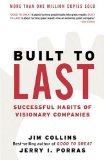
Built to LastBuilt to Last: Successful Habits of Visionary Companies

Published in 1994, Built to Last has been a fixture on the Business Week best-seller list for more than six years and has been translated into 29 languages.

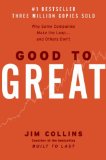
Good to GreatGood to Great: Why Some Companies Make the Leap … And Others Don’t
Published in 2001, Good to Great has attained long-running positions on the New York Times, Wall Street Journal and Business Week best-seller lists, has sold 3 million hardcover copies since publication and has been translated into 35 languages, including Latvian, Mongolian and Vietnamese.

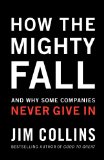
How the Mighty FallHow the Mighty Fall: And Why Some Companies Never Give In

How the Mighty Fall is his most recent book published in May of 2009. Count on this one to join the ranks of popularity of the previous two titles as the author reveals that every institution, no matter how great, is vulnerable to decline. Decline, it turns out, is largely self-inflicted, and the path to recovery lies largely within our own hands. The book describes the five step-wise stages of decline and how to reverse their course.

Beyond EntrepreneurshipBeyond Entrepreneurship: Turning Your Business Into an Enduring Great Company

Collins co-authored this book with William C. Lazier in 1995 providing entrepreneurs with building blocks to help their companies sustain high performance, play a leadership role in their industries, and remain great for generations.

Collins is an American business consultant, author, and lecturer on the subject of company sustainability and growth. He frequently contributes to Harvard Business Review, Business Week, Fortune and other magazines and journals. Jim Collins is a student and teacher of enduring great companies—how they grow, how they attain superior performance, and how good companies can become great companies. Having invested more than a decade of research into the topic, he knows of what he speaks.

Jim has served as a teacher to senior executives and CEOs at more than a hundred corporations. He has also worked with social sector organizations, such as: Johns Hopkins Medical School, the Girl Scouts of the USA, the Leadership Network of Churches, the American Association of K-12 School Superintendents, and the United States Marine Corps. In 2005 he published a monograph: Good to Great and the Social Sectors.

Driven by a relentless curiosity, Jim began his research and teaching career on the faculty at Stanford Graduate School of Business, where he received the Distinguished Teaching Award in 1992. In 1995, he founded a management laboratory in Boulder, Colorado, where he now conducts research and teaches executives from the corporate and social sectors.

He also re-published an autobiography called Test Pilot written by Collins’ grandfather, Jimmy Collins, for whom Jim Collins is named. Grandfather Jimmy Collins was the chief test pilot for the Grumman military aircraft company during the 1930s, and Clark Gable portrayed him in the movie version of his book. Jimmy Collins died testing the F3 biplane, which crashed while he was testing it.

motivational speaker Harry K. JonesHarry K. Jones is a motivational speaker and consultant for AchieveMax®, Inc., a company of motivational speakers who provide custom-designed seminars, keynote presentations, and consulting services.

Harry's top requested topics include change management, customer service, creativity, employee retention, goal setting, leadership, stress management, teamwork, and time management

For more information on Harry's presentations, please call 800-886-2MAX or fill out our contact form.

Follow Harry K. Jones on FacebookFollow Harry K. Jones on Linked InFollow Harry K. Jones on TwitterFollow Harry K. Jones on Google+

Book Reviews

Recommended Books

Articles on Authors and Reading

Think Times Are Tough?

You know we’re all dealing with multiple challenges at the moment. Some are difficult and others may even seem insurmountable. How you perceive these challenges could very well determine if you will, in fact, survive them. Your perception can be changed but only by your choosing to change your thinking.

I heard the following short story on the radio over the weekend. It’s a perfect example of how, with very little effort and the right information, you can look at things differently. Read it yourself. Think about it. Be grateful.

A Small Request

five-year-oldI was taking my usual morning walk when a garbage truck pulled up beside me. I thought the driver was going to ask for directions. Instead, he showed me a picture of a cute little five-year-old boy.

“This is my grandson, Jeremiah,” he said. “He’s on a life-support system at a Phoenix hospital.”

Thinking he would next ask for a contribution to his hospital bills, I reached for my wallet. But he wanted something more than money. He said, “I’m asking everybody I can to say a prayer for him. Would you say one for him, please?” I did. And my problems didn’t seem like much that day.

motivational speaker Harry K. JonesHarry K. Jones is a motivational speaker and consultant for AchieveMax®, Inc., a company of motivational speakers who provide custom-designed seminars, keynote presentations, and consulting services.

Harry's top requested topics include change management, customer service, creativity, employee retention, goal setting, leadership, stress management, teamwork, and time management

For more information on Harry's presentations, please call 800-886-2MAX or fill out our contact form.

Follow Harry K. Jones on FacebookFollow Harry K. Jones on Linked InFollow Harry K. Jones on TwitterFollow Harry K. Jones on Google+